Dottorato in Engineering Science (a partire dal XXXVIII ciclo)
Coordinatore: Prof. Luigi Berardi
NEW - Bando di concorso per l'ammissione al Dottorato di Ricerca - XLII Ciclo - a.a. 2026/2027
BREVE DESCRIZIONE (Presentazione_PhD-Engineering Science)
Il programma di dottorato in Scienze dell'ingegneria ha l'ambizione di rafforzare la sinergia tra le aree tradizionali dei dottorati internazionali in ingegneria, su costruzioni, infrastrutture e materiali, con le opportunità dell'intelligenza artificiale, della bioingegneria e dell'ingegneria industriale. Tale prospettiva multidisciplinare ha lo scopo di creare nuove conoscenze, soluzioni e prodotti per il progresso e il benessere della società, nel contesto della transizione in corso nei settori digitale, ambientale e sanitario, saldamente basati su un solido approccio ingegneristico alla risoluzione dei problemi del mondo reale.
Lo sviluppo e l'applicazione di nuove conoscenze attese avranno un impatto sulle varie sfide della società nei settori della progettazione e gestione sostenibile delle infrastrutture, della resilienza e della preparazione agli eventi estremi, nonché di soluzioni personalizzate a supporto della salute e del benessere dell’individuo.
Il programma di dottorato collabora con soggetti pubblici e privati che richiedono competenze ingegneristiche avanzate a varie scale, dall'ambiente costruito ai sistemi nel settore biomedicale.
Il dottorato in Scienze dell’Ingegneria unirà il settore ERC di "Scienze fisiche e ingegneria" con vari sottosettori di "Scienze della vita" e "Scienze sociali e umanistiche". Per questo è nato presso il Dipartimento di Ingegneria e Geologia dell'Università “G. D’Annunzio”, sebbene siano inclusi componenti provenienti da altri atenei o da altri dipartimenti per completare le competenze necessarie al progetto formativo.
Il programma di dottorato persegue direttamente diversi obiettivi dell'Agenda 2030 per lo Sviluppo Sostenibile individuati dalle Nazioni Unite: 3. Garantire una vita sana e promuovere il benessere per tutti a tutte le età; 6. Garantire a tutti la disponibilità e la gestione sostenibile dell'acqua […]; 7. Garantire a tutti l'accesso a un'energia conveniente, affidabile, sostenibile e moderna; 9. Costruire infrastrutture resilienti, promuovere un'industrializzazione inclusiva e sostenibile e promuovere l'innovazione; 11. Rendere le città e gli insediamenti umani inclusivi, sicuri, resilienti e sostenibili.
Il programma di dottorato è studiato per fornire agli studenti le seguenti competenze di alto livello:
- progettare, sviluppare e coordinare il lavoro di ricerca nelle aree tecnico-scientifiche del dottorato;
- sviluppare un approccio collaborativo per lo sviluppo delle attività di ricerca a livello nazionale e internazionale;
- disegnare e implementare processi di trasferimento dei risultati della ricerca applicata come innovazioni di processo-prodotto nel settore pubblico e privato;
- affrontare come “professionisti della ricerca” i diversi aspetti inerenti l’accesso ai finanziamenti, la collaborazione con più partner nazionali e internazionali, l’organizzazione di attività sperimentali e la gestione dei risultati.
La formazione dottorale di alto livello fornisce competenze avanzate in matematica applicata, fisica, ingegneria e tecnologia per acquisire capacità di ricerca grazie a una sinergia tra modellazione, sperimentazione, simulazione numerica, progettazione e ottimizzazione. Il programma fornisce inoltre competenze amministrative, finanziarie ed etiche per accedere e gestire fondi di ricerca pubblici e privati ??a livello nazionale e internazionale. Ciò consente loro di assumere ruoli di primo piano nei settori dell'industria, della pubblica amministrazione e del mondo accademico.
I dottorandi frequentano corsi di base e avanzati opzionali in vari aspetti delle scienze ingegneristiche e della ricerca. A partire dal secondo anno, vengono intraprese le attività di ricerca finalizzate con la tesi di dottorato che affronta lo sviluppo e l'applicazione di nuove conoscenze su uno specifico ambito sulla base del progetto presentato dal dottorando e approvato dal Collegio dei Docenti. La formazione accademica sarà integrata e si intersecherà con l'esperienza presso aziende private di eccellenza.
Il Dottorato sostiene collaborazioni con enti di ricerca e università estere.
CURRICULA
Engineering for sustainable and resilient infrastructures. Il curriculum include temi di innovazione tecnico-scientifica che riguardano l’ambiente costruito, a partire dal singolo edificio fino alla infrastrutture a rete alla scala urbana o territoriale, con particolare riferimento agli aspetti della sostenibilità e della resilienza rispetto alle diverse forme di rischio connesse (idrogeologico, sismico, climatico). Le principali tematiche affrontate includono: analisi, progettazione e valutazione della sicurezza di costruzioni moderne e storiche; sistemi geotecnici sotto l'influenza naturale e antropica, utilizzando diverse scale di valutazione, ovvero a scala singola, urbana e regionale; comportamento energetico degli edifici; analisi e gestione delle infrastrutture idrauliche in area urbana e con riferimento alle strutture costiere; tecniche innovative per l'ingegneria edile; modellazione e collaudo di materiali e strutture; indagini sperimentali e prove di laboratorio avanzate sui suoli; analisi e sviluppo di materiali sostenibili per le costruzioni.
Engineering for well-being and health. Il curriculum è orientato allo sviluppo di conoscenze e soluzioni innovative per supportare il benessere e la salute delle persone. L’approccio multidisciplinare rappresenta la base metodologica per ampie possibilità di sviluppare nuove conoscenze, processi e prodotti in diversi ambiti, tra cui: diagnostica per immagini avanzata, robotica, biomateriali, biomeccanica, riabilitazione, telemedicina, “assisted ambient living”. A questo scopo, le opportunità tecnologiche vengono integrate con la formazione su diversi temi di diretta rilevanza per l’ingegneria biomedica tra cui: “data analysis”, “advanced signal processing” o “human-machine interaction”. Le attività di formazione e ricerca saranno svolte nei laboratori universitari o in collaborazione con partner del settore privato o pubblico.
Guide for International PhD Students
PhD Projects
Al Agha Wesam
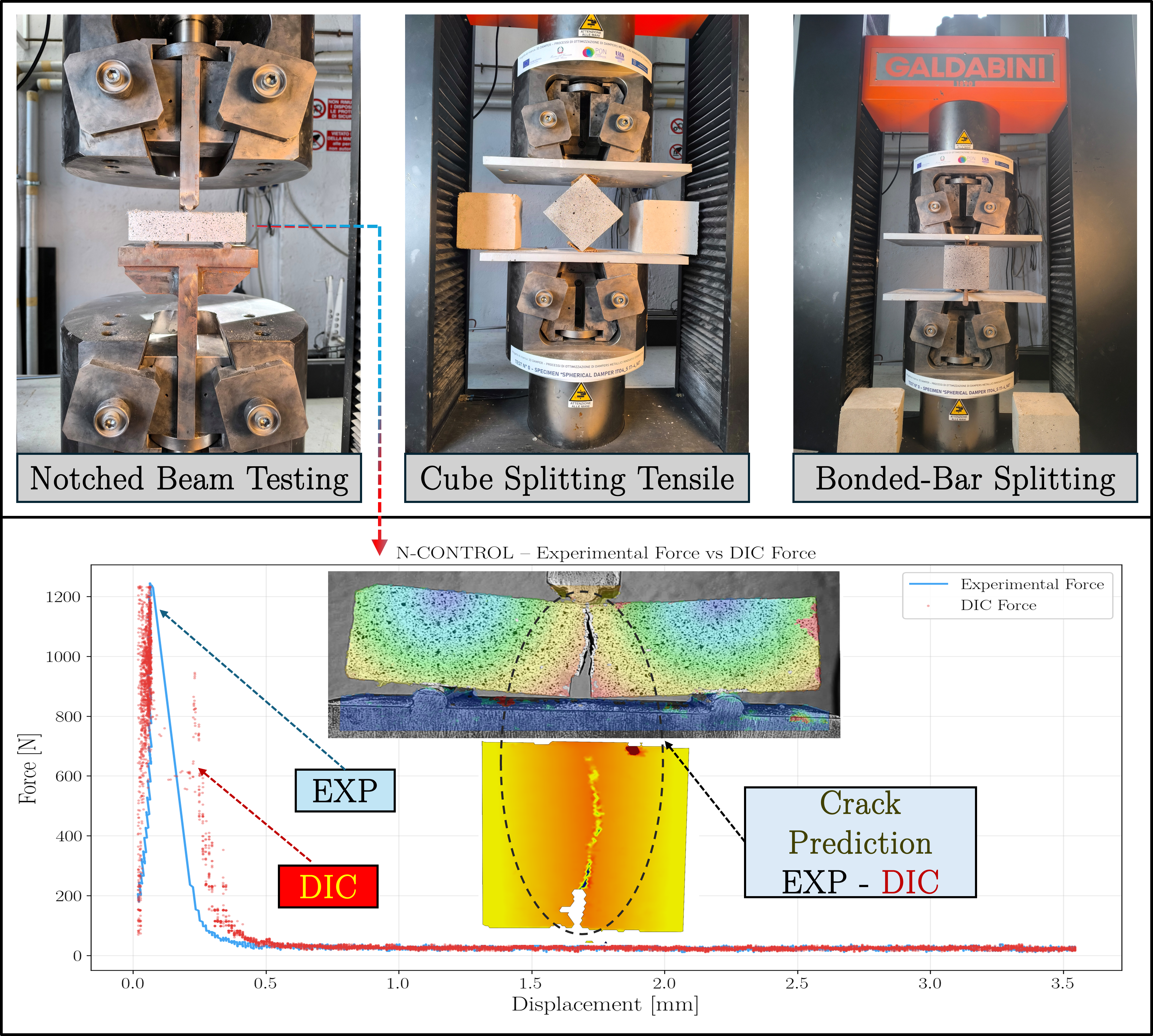
The research made pioneering contributions to the fracture mechanics of fibre-reinforced composites by coupling extensive physical testing with non-contact optical diagnostics. A multi-scale experimental program was designed and executed, testing 170 (PFRM beams and PFRC cubes). Utilising ZEISS Correlate, full-field Digital Image Correlation (DIC) was implemented to track sub-pixel cracking localisation and virtual extensometry kinematics of fracture, splitting tensile, and pull-out phenomena. Crucially, the Optical Deflection-Derived Compliance (ODDC) methodology was developed, an innovative algorithm correcting testing-machine compliance. This validated framework extracts high-fidelity material responses, offering the structural health monitoring field a robust pipeline for tracking crack evolution and post-peak residuals.
Casarin Arianna
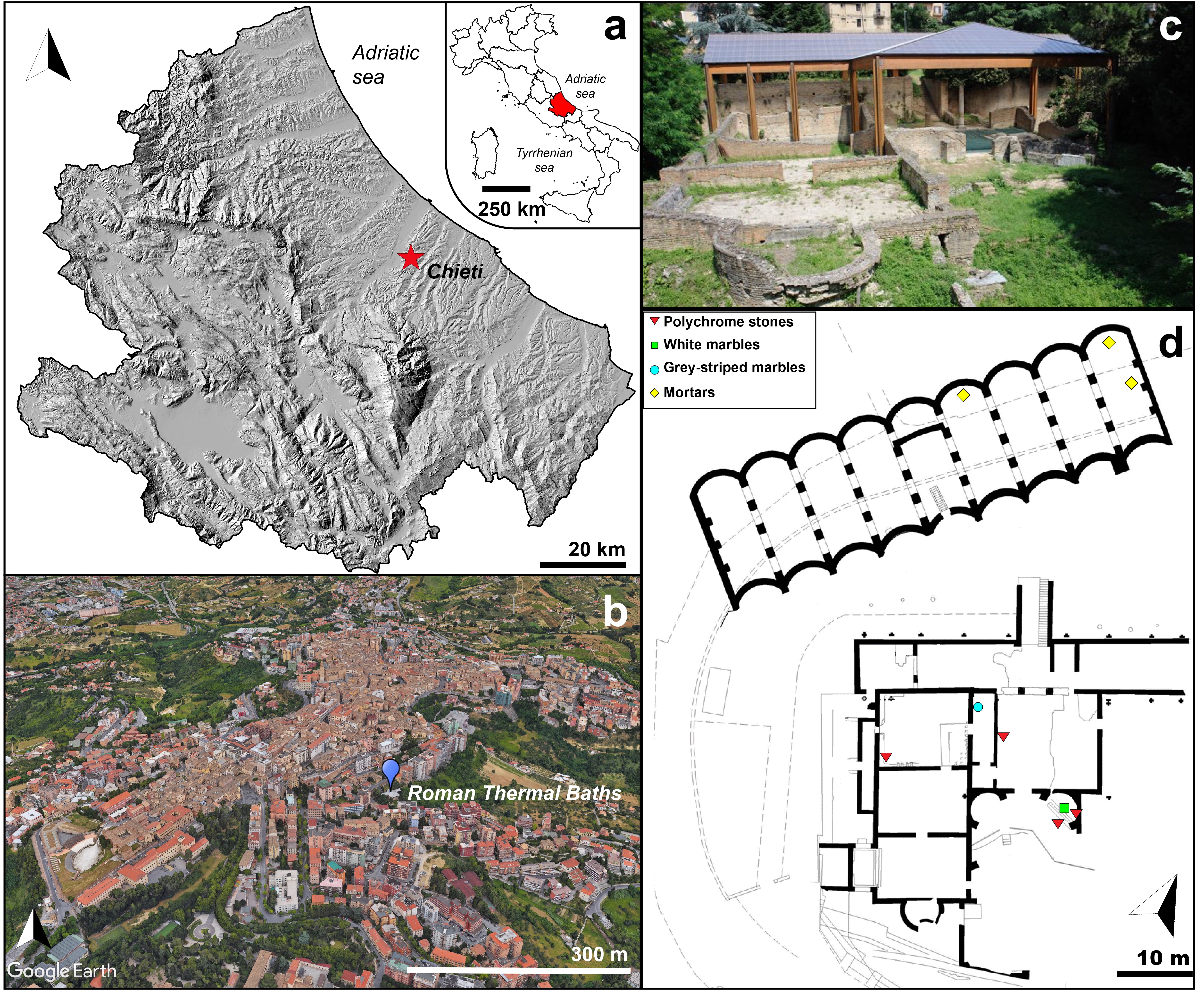
The project combines quantitative textural analysis using 2D and 3D imaging methodologies (High Resolution Scanner, Transmission Optical Microscopy, Scanning Electron Microscopy, X-Ray Computed micro-Tomography) together with mineralogical (X-Ray Powder Diffraction, Raman spectroscopy), geochemical (X-Ray Fluorescence, stable isotopes of Oxygen and Carbon) and petrographic analyses. These methodologies are applied to archaeological samples from the site of the Roman Thermal Baths (1st-2nd century A.D.) of Teate Marrucinorum (Chieti, Italy). The aim is to assess the provenance of ornamental stones used in the thermal rooms and characterize the morphotextural properties of aggregates used in the cisterns' cocciopesto mortar.
Ciaglia Sarah
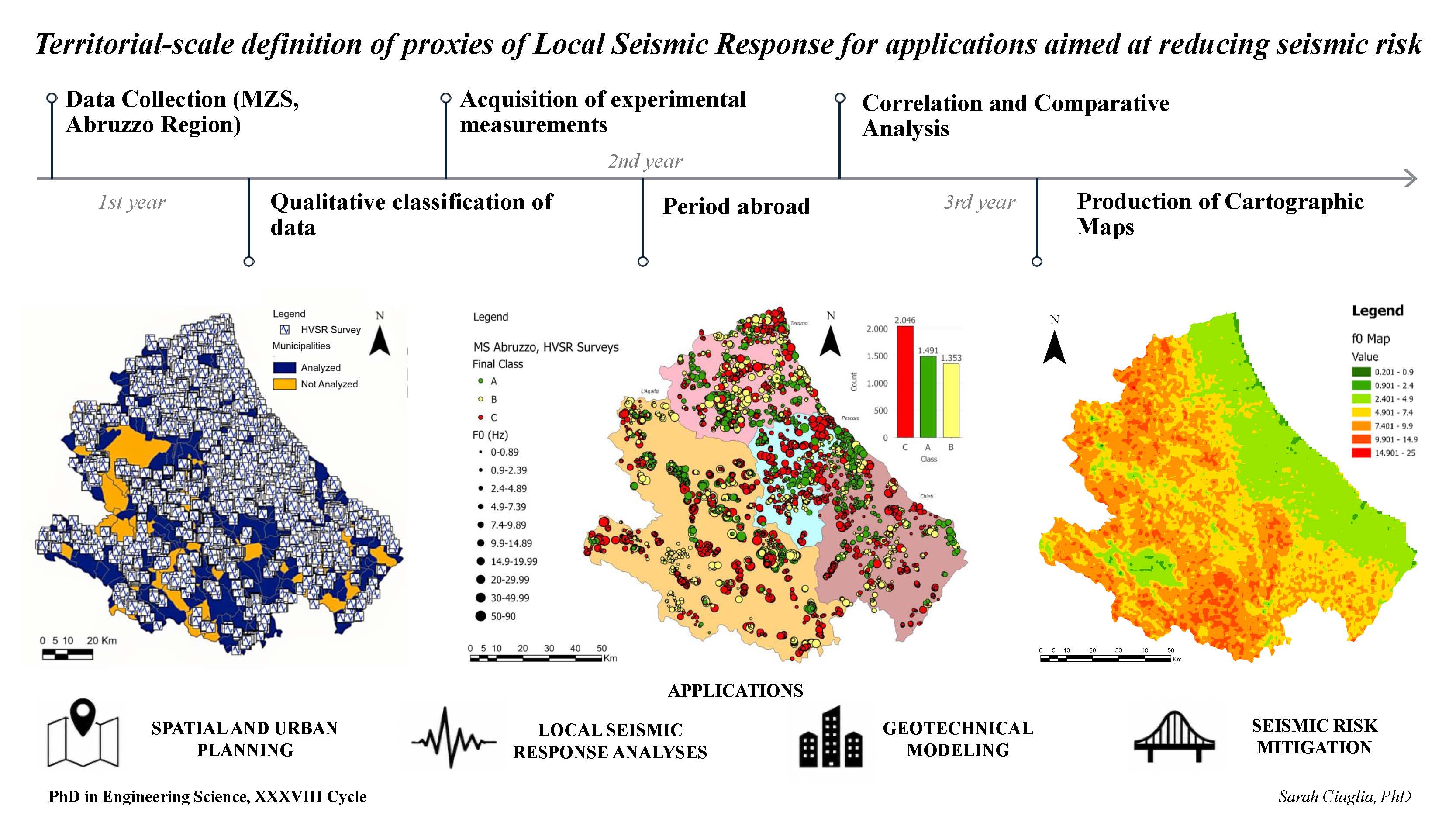
The project develops an integrated approach based on the Seismic Microzonation database of the Abruzzo Region, which covers approximately 80% of the municipalities. The analysis of 4891 HVSR surveys enabled the characterization of the site's fundamental resonance frequency (f0), a key parameter for geological and geotechnical modeling and for local seismic response analyses. The activities focused on the quality control of HVSR surveys and on the correlation of the f0 parameter with geophysical parameters, such as Vs30 and H800, leading to the identification of the "Resonant Bedrock" concept. The results include the development of maps and operational tools supporting spatial planning, preliminary engineering design, and seismic risk mitigation.
Khan Nasir Ullah
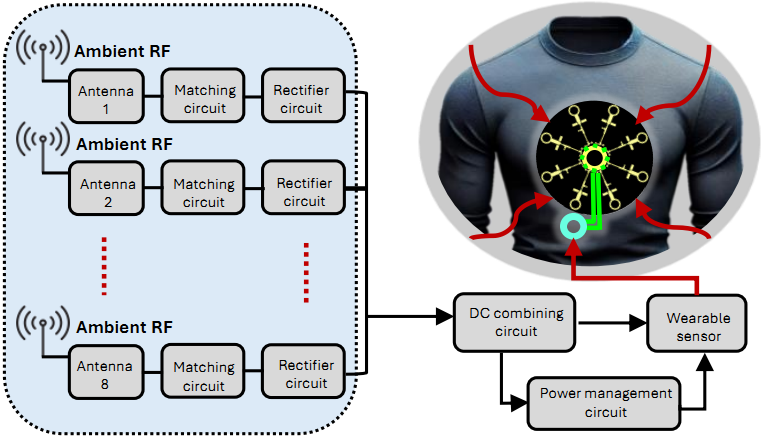
As wearable healthcare and Internet of Things (IoT) technologies continue to advance, the need for sustainable, battery-free power solutions has become increasingly important. This research develops innovative wearable RF energy harvesting systems capable of converting ambient wireless signals into usable electrical power for biomedical sensors. By combining flexible textile-based antennas, high-efficiency dual-band rectifiers, and polarization-robust antenna arrays, the project enables reliable energy harvesting from everyday RF sources such as Wi-Fi networks. The proposed technology demonstrates the feasibility of self-powered wearable devices, paving the way for next-generation smart textiles, continuous health monitoring systems, and environmentally sustainable digital healthcare solutions.
Bosello Giulia
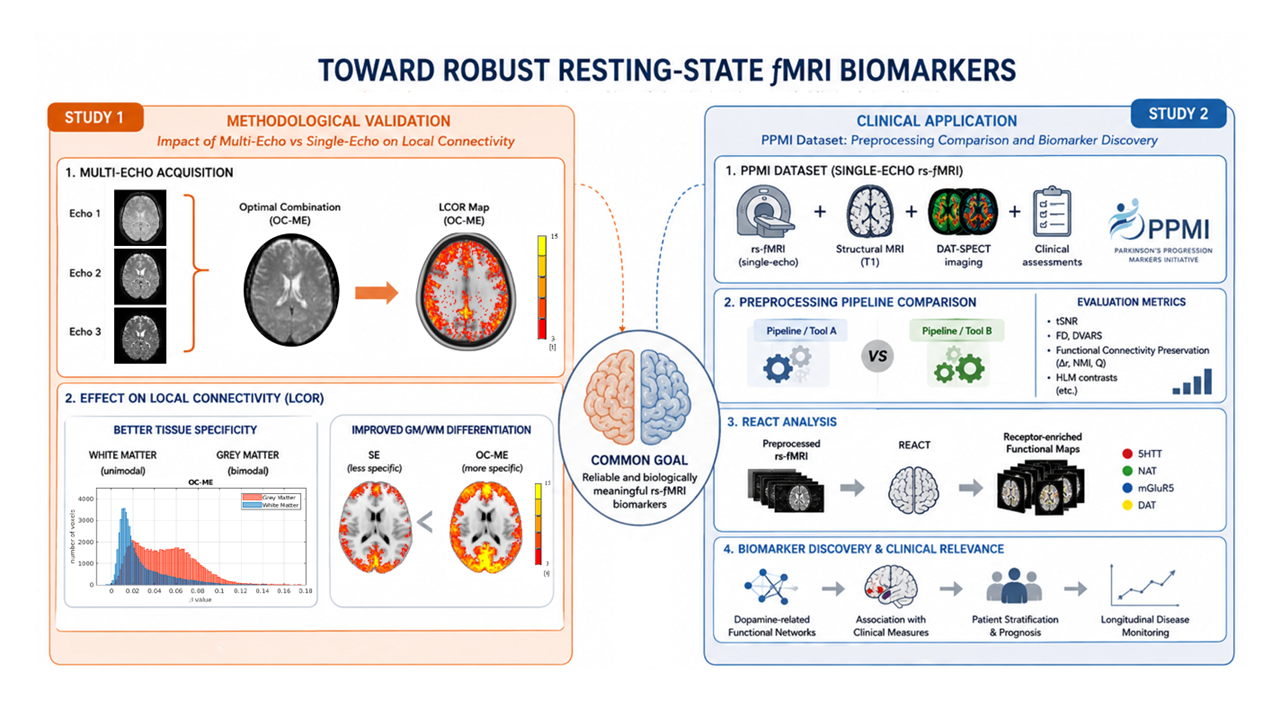
The research is focused on the methodological validation and clinical application of resting-state fMRI biomarkers. Specifically, it investigates the influence of multi-echo versus single-echo acquisitions on local functional connectivity measures and evaluates advanced rs-fMRI processing pipelines using multimodal neuroimaging data from the Parkinson’s Progression Markers Initiative (PPMI). By integrating functional MRI, structural MRI, DAT-SPECT imaging, and clinical assessments, the study aims to identify and validate dopamine-related functional biomarkers associated with Parkinson’s disease progression. The ultimate goal is to support the development of robust, non-invasive tools for early diagnosis, patient stratification, and longitudinal disease monitoring.
Dewadar Ahmed Kamal Hamed
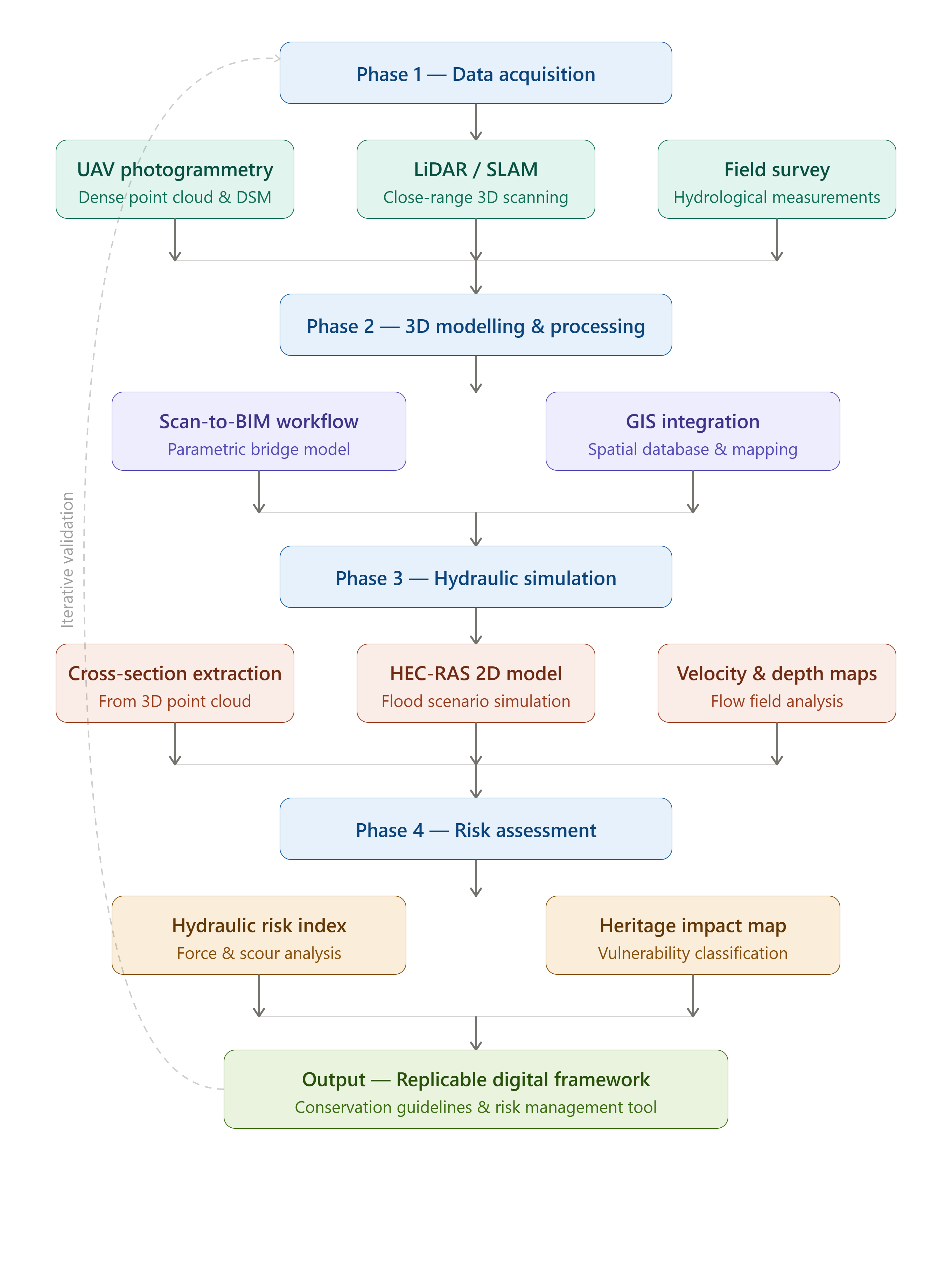
The research investigates the hydraulic impact on historic masonry bridges through advanced 3D modelling and geomatics techniques. By integrating UAV photogrammetry, LiDAR scanning, and open-source hydraulic simulation software, the study develops a methodology to assess hydraulic risk and its effect on the structural integrity and preservation of heritage bridges. The work also extends to the digital documentation of archaeological sites and built heritage using Scan-to-BIM workflows, SLAM technology, and GIS-based databases. The ultimate goal is to provide a comprehensive multi-sensor digital framework supporting the conservation and risk management of historical structures.
Gill Eliezer Zahid
For Predicting Air Pollutants: We forecast multiple air pollutants at construction sites (e.g., PM2.5, PM10, SO2, NO, CO2, O3) 12-hours in advance for health and environmental monitoring to guarantee sustainability using machine learning and deep learning models for prediction, like ARIMA, ANN, Random Forest, Gradient Boosting, LSTM. For Classifying Physiological Data: We classify the attention states based on physiological signals (ECG and respiratory data) using machine learning models like Random Forest, Gradient Boosting, KNN, and SVM. By evaluating the classification models’ performance, with a focus on achieving high accuracy and understanding how attention states influence physiological responses at construction sites.
Guglielmi Leonardo
The research investigates active and passive solutions to ensure thermo-hygrometric and acoustic comfort, ranging from the characterization of the building envelope to the study of occupied spaces before and after the installation of controlled mechanical ventilation systems. In particular, 3D-printed clay bricks with optimized internal geometries are analyzed, measuring their thermal conductivity and absorption coefficient using dedicated experimental setups. In parallel, within the necessARIA project, environmental monitoring campaigns are conducted in school classrooms, on the basis of which CFD models are developed and calibrated in COMSOL Multiphysics to study the effectiveness of natural and mechanical ventilation on indoor air quality.
Mancini Letizia
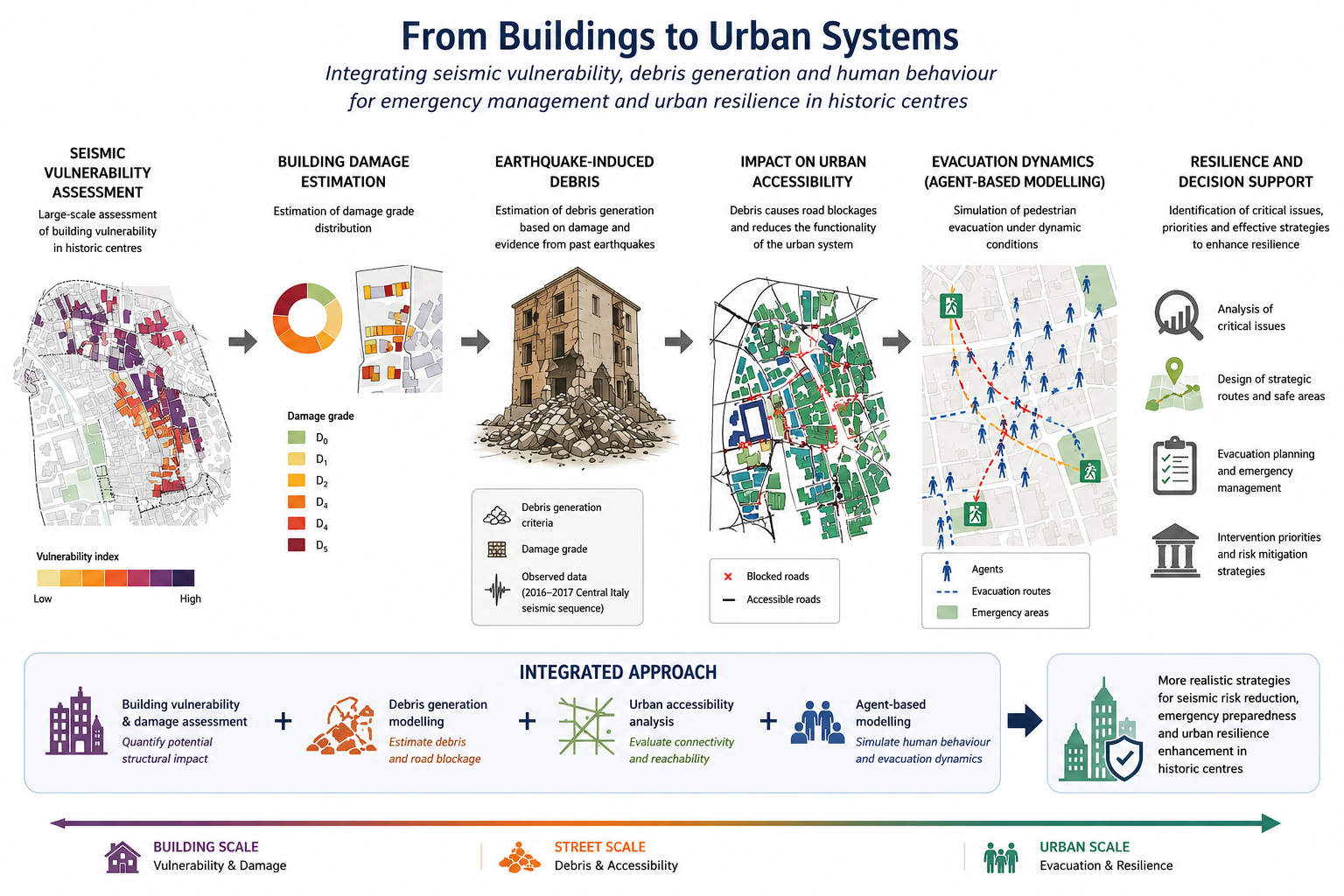
The research focuses on the integration of seismic vulnerability assessment and emergency management strategies in historic urban centres. In particular, I investigate how earthquake-induced building damage and debris can affect the functionality, accessibility and resilience of urban systems during emergency situations. By combining large-scale seismic vulnerability analyses with Agent-Based Modelling, my work explores the dynamic interaction between the built environment and human behaviour during evacuations. The aim is to better understand cascading effects generated by earthquakes and to support more realistic risk reduction, emergency preparedness and resilience-enhancement strategies for historic centres exposed to seismic hazards.
Tomaiuolo Federica
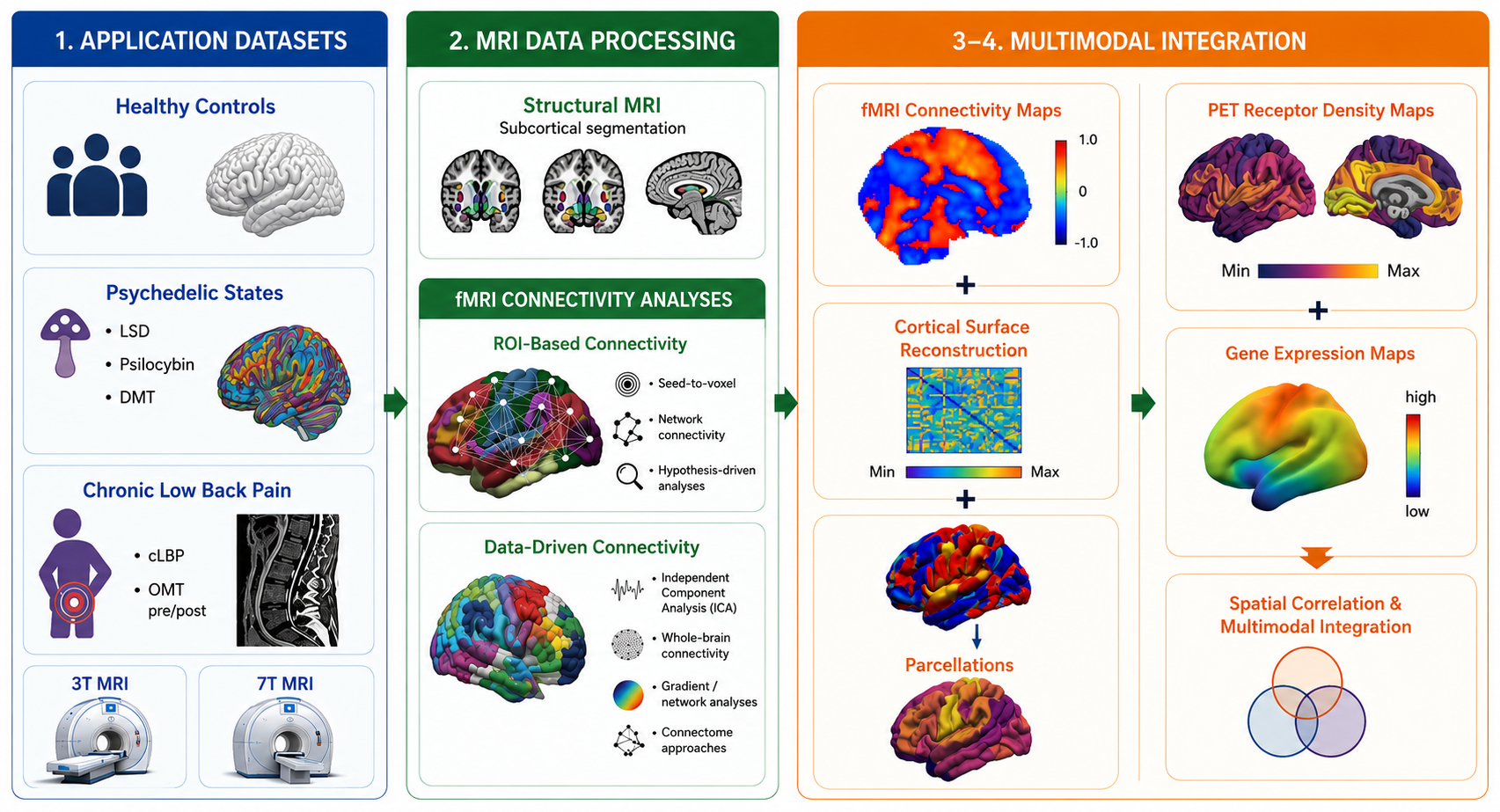
The PhD research focuses on developing advanced functional magnetic resonance imaging (fMRI) analysis methods to investigate the neural correlates of brain function. The project involves the implementation of resting-state functional connectivity metrics (both data-driven and Region-Of-Interest based), advanced subcortical segmentation and cortical surface reconstruction techniques, and multimodal approaches integrating functional connectivity data with PET-derived receptor density and gene expression maps. By combining these approaches with high-resolution 3T and 7T MRI data, the research aims to characterize cortical and subcortical connectivity patterns and their underlying molecular substrates across healthy conditions, chronic pain disorders, and psychedelic-induced brain states.
Picciani Giuliano
The research focuses on discovering and testing innovative computational techniques for the structural analysis of plate elements. The objective is to develop numerical methods that are computationally advantageous, while simultaneously providing a better and clearer understanding of the result's reliability.
Dhima Andrea
This research aims to assess the seismic vulnerability of reinforced concrete (RC) bridges and viaducts, accounting for the influence of corrosion-induced degradation. The primary objective is to derive performance-based archetype classes to support seismic risk management strategies. Once these performance classes are established, the investigation examines the impact of corrosion deterioration to evaluate structural resilience. Finally, updated archetype classes are proposed to integrate the effects of degradation across various levels of corrosion.
Di Marino Greta
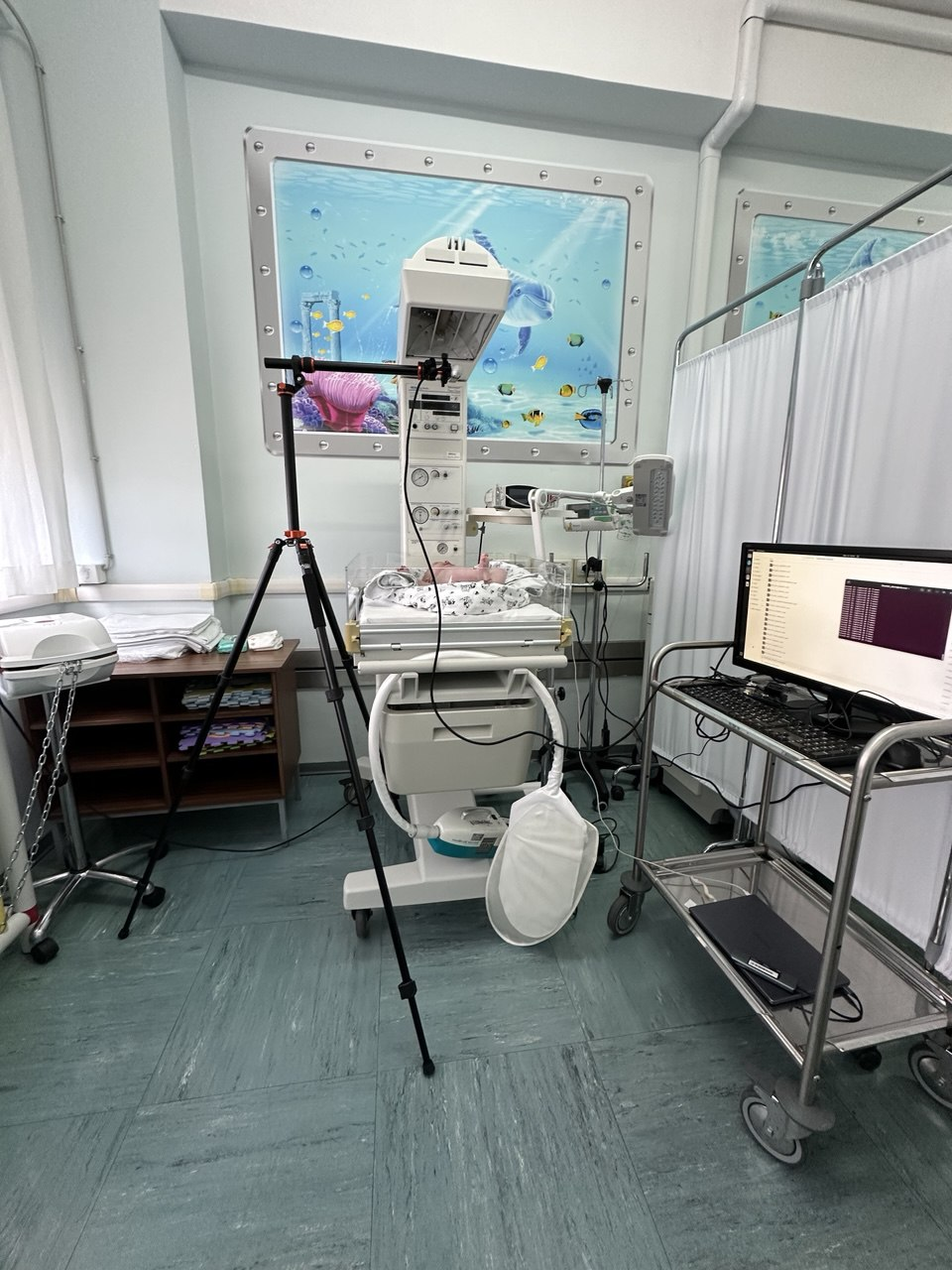
The aim is to develop artificial intelligence-based models to support clinicians in the quantitative and continuous assessment of movements from newborns to children. The project is based on the acquisition and analysis of video recordings collected through RGB-depth cameras, enabling non-invasive monitoring of spontaneous movements.
Finocchiaro Regina
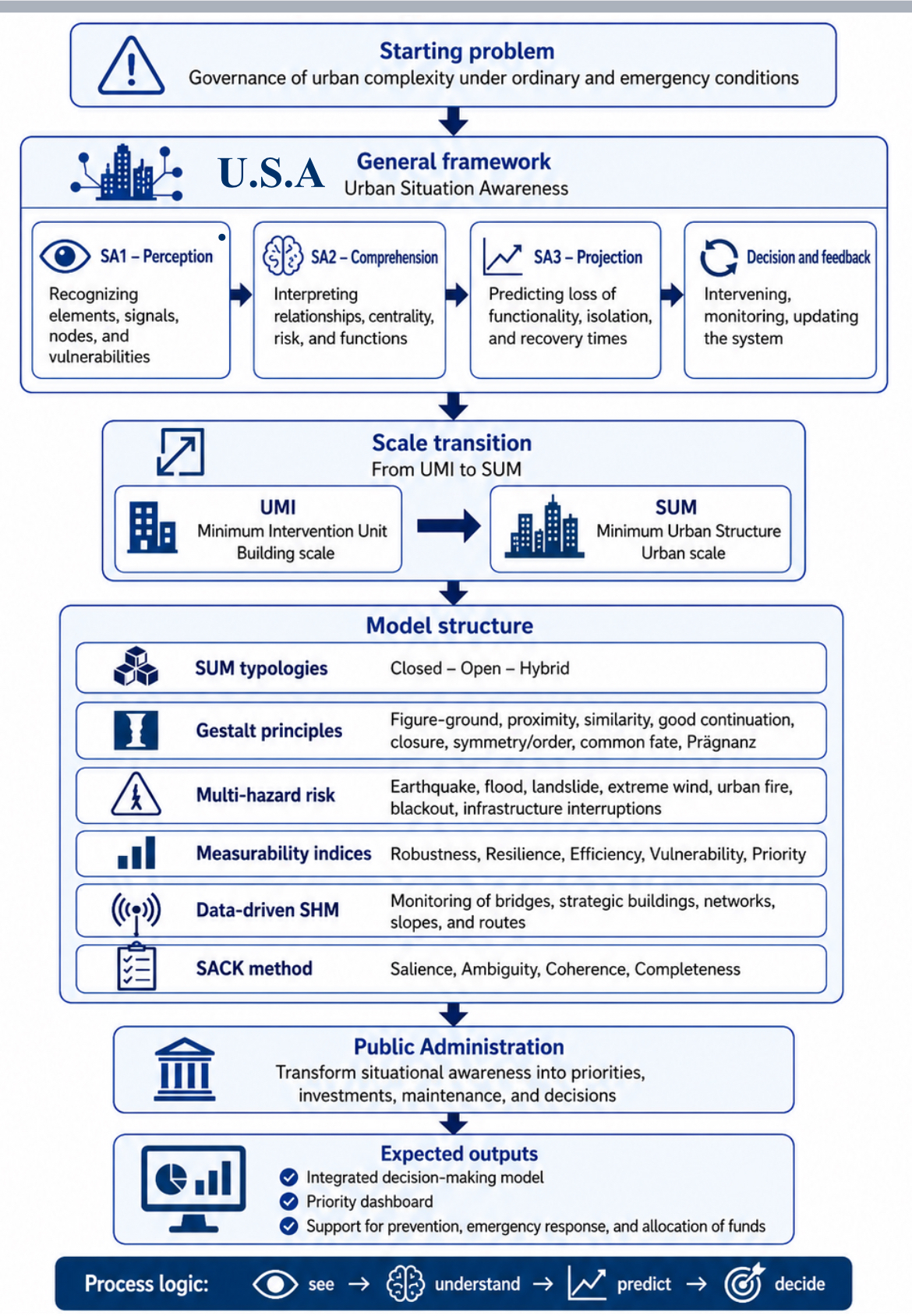
The research will focus on monitoring, control, and recovery strategies for historic buildings and urban infrastructure systems, supporting emergency planning and urban functionality. Particular attention will be given to strategic connections and access routes, including bridges and related infrastructure, as well as essential service networks. The research will examine the Minimum Urban Structure, understood as the essential system of buildings, routes, nodes, and services needed to maintain accessibility, continuity, and basic urban functions. Robustness and resilience will be investigated before, during, and after critical events, also through the innovative application of Gestalt principles to structural interpretation and risk assessment processes.
Romano Francesco
The project aims to develop high-density surface electromyography (HD-sEMG) sensors fabricated using Aerosol Jet Printing (AJP) technology for the myoelectric control of upper-limb prostheses. The proposed sensors are designed to provide high-resolution muscle activity recordings while improving wearability, flexibility, and user comfort, thereby enabling accurate detection of motor intentions. These sensors may support more reliable and intuitive prosthetic control, enhancing signal quality and functional performance while reducing the limitations associated with conventional electrode technologies.
Shao Weiyi
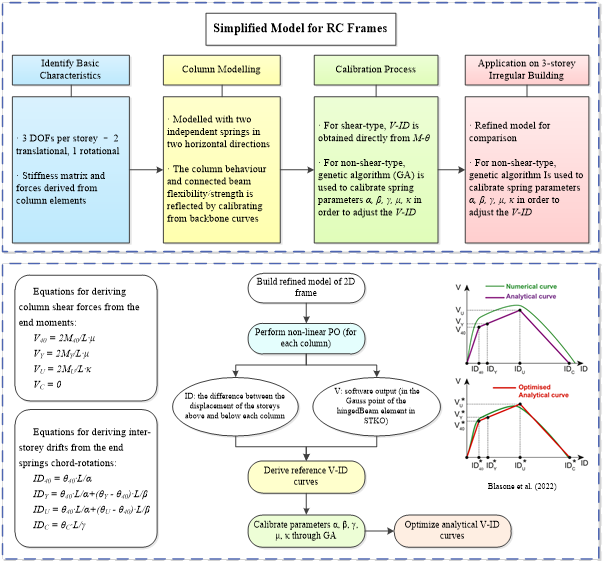
This project explores simplified routes for calibrating reduced order models (ROMs) of reinforced concrete moment resisting frames. The ROM under research relies on two orthogonal Shear-Drift springs for each column, calibrated based on the monotonic and cyclic response of refined models. Factors that affect the parameter calibration are considered, but the calibration on the plane frame is skipped. The overall aim is to investigate the accuracy of the ROM when a non-bespoke calibration is carried out and to then explore the application of the ROM model for large-scale automatic implementation for vulnerability studies.
Campilii Elena
The PhD research focuses on the application of generative artificial intelligence in the biomedical field. The project explores how advanced generative models can support the synthesis, analysis, and interpretation of heterogeneous biomedical data, including visual and clinical information. In this context, the research is particularly oriented toward paediatric applications, with the aim of supporting the study of neurodevelopmental disorders and contributing to the development of AI-based methodologies for biomedical research and early assessment.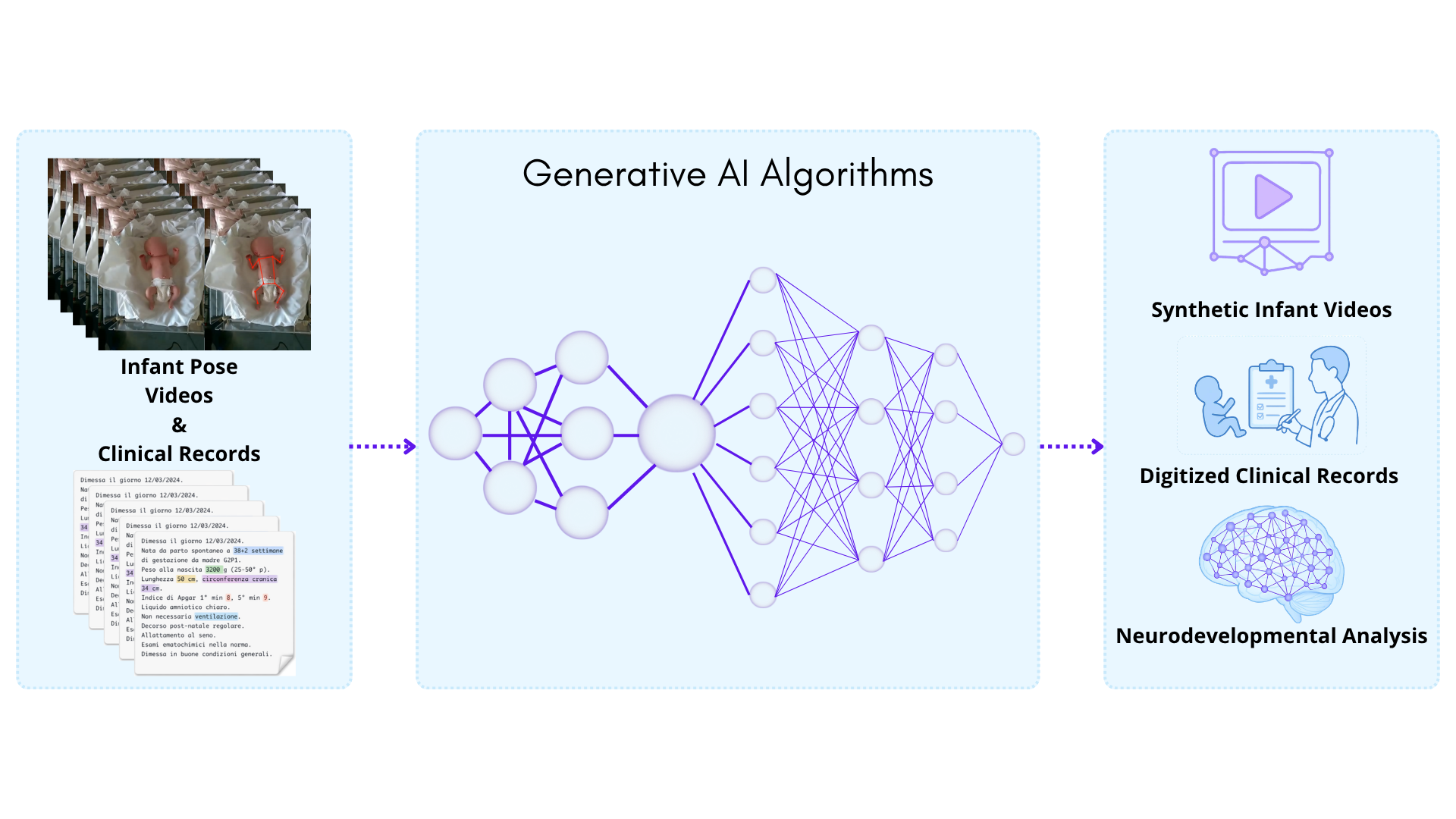
Cardinale Emanuele
The aim of this project is to design and develop AI-based models for 3D infant pose estimation and movement analysis. The research focuses on the extraction of accurate 3D skeletal representations from video recordings acquired with RGB-D cameras and on the use of generative AI techniques to model, analyze, and characterize movement patterns. This approach enables the non-invasive assessment of motor behavior and provides quantitative tools to support clinical evaluation and monitoring.
Ciccarelli Lorenzo
This research project focuses on the structural health monitoring of bridges and viaducts by integrating InSAR (Synthetic Aperture Radar Interferometry) data with Finite Element Modelling (FEM). Although InSAR provides high-precision, millimetre-level displacement measurements, its large-scale application is currently hindered by orbital acquisition geometries and data sparsity. The research aims to overcome these limitations by developing a hybrid digital twin framework. This approach combines data-driven techniques with physics-based models (FEM) to reconstruct complete displacement fields, isolate structural anomalies from environmental variations, and enable predictive maintenance.
D'Agostino Valentina
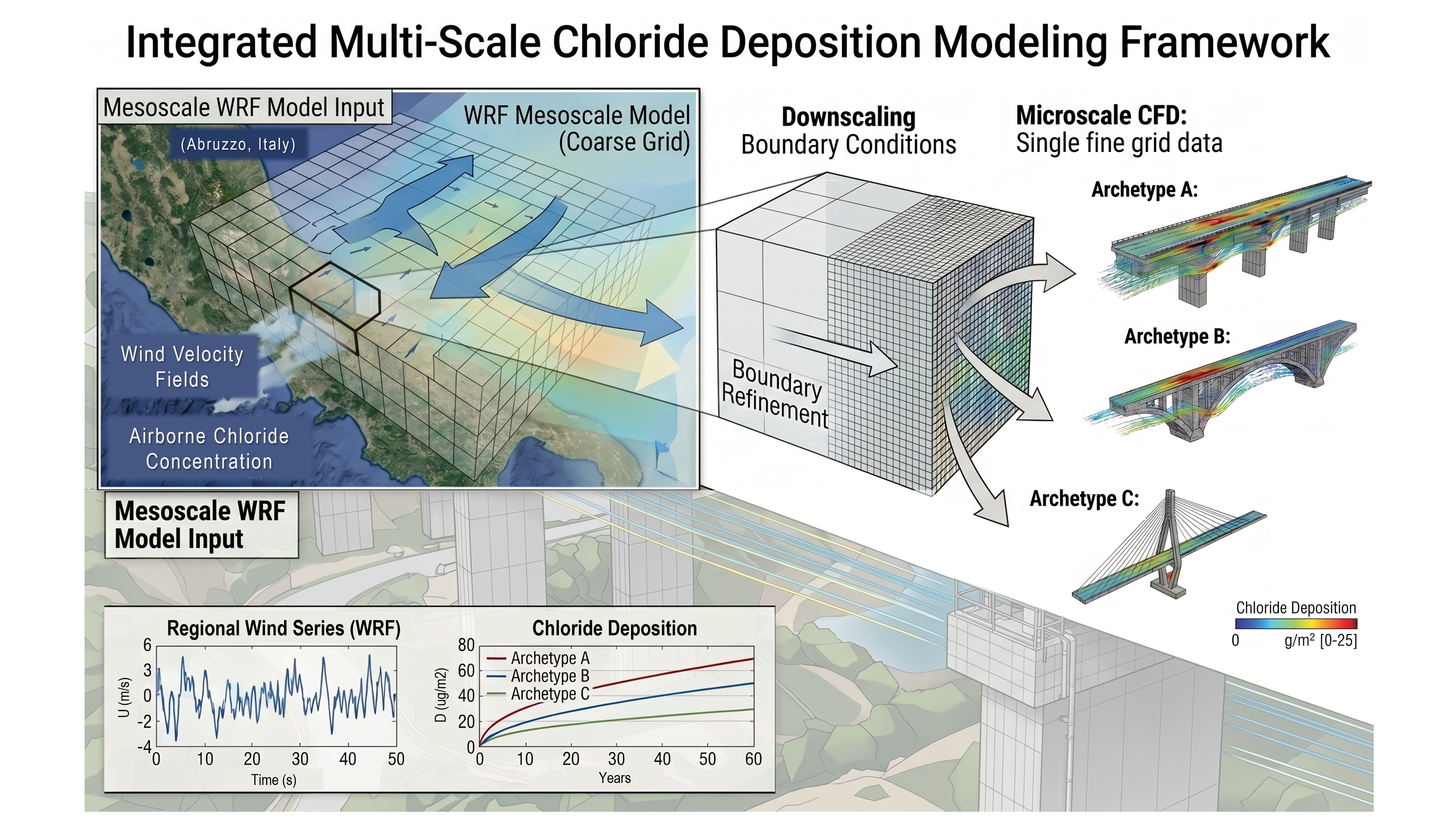
This PhD research addresses the assessment and predictive modeling of atmospheric chloride-induced corrosion in civil infrastructure. Departing from conventional material-centric paradigms, the study adopts an aerodynamics-driven methodology. By coupling Computational Fluid Dynamics (CFD) simulations with meteorological data analysis, the research evaluates the correlation between structural macro-geometry, wind flow dynamics, and the subsequent deposition of airborne chlorides onto exposed surfaces. This multidisciplinary framework—bridging applied meteorology and structural engineering—aims to deliver advanced analytical tools to optimize the design, predictive maintenance, and service life of structures in aggressive environments.
D’Ambrosio Giulia
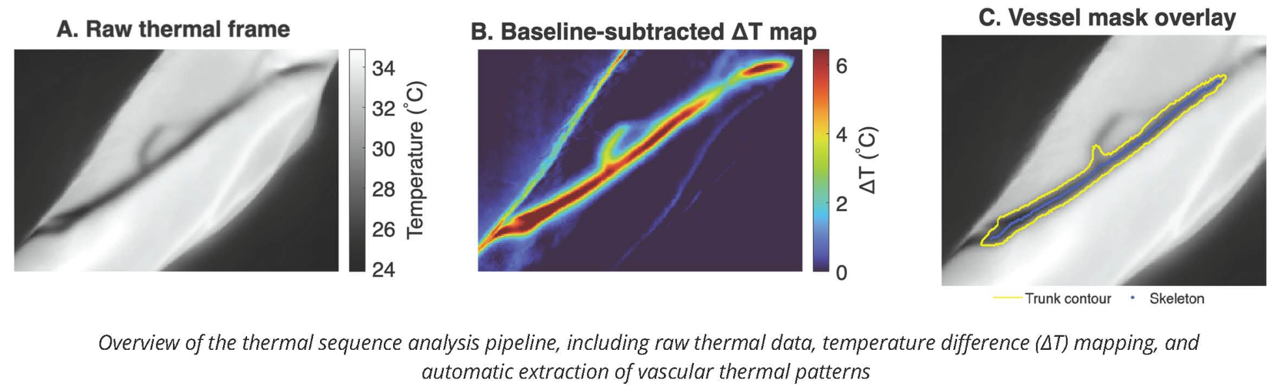
This research project focuses on the development of AI-based computational models for simulating heat exchange processes within biological tissues, with particular attention to vascular thermal dynamics. The aim is to create accurate and generalizable models capable of integrating thermofluid dynamics, medical imaging, and data-driven approaches. These models will support the development of non-invasive diagnostic tools and patient-specific solutions for the early detection, monitoring, and assessment of vascular pathologies.
Di Filippo Gaia
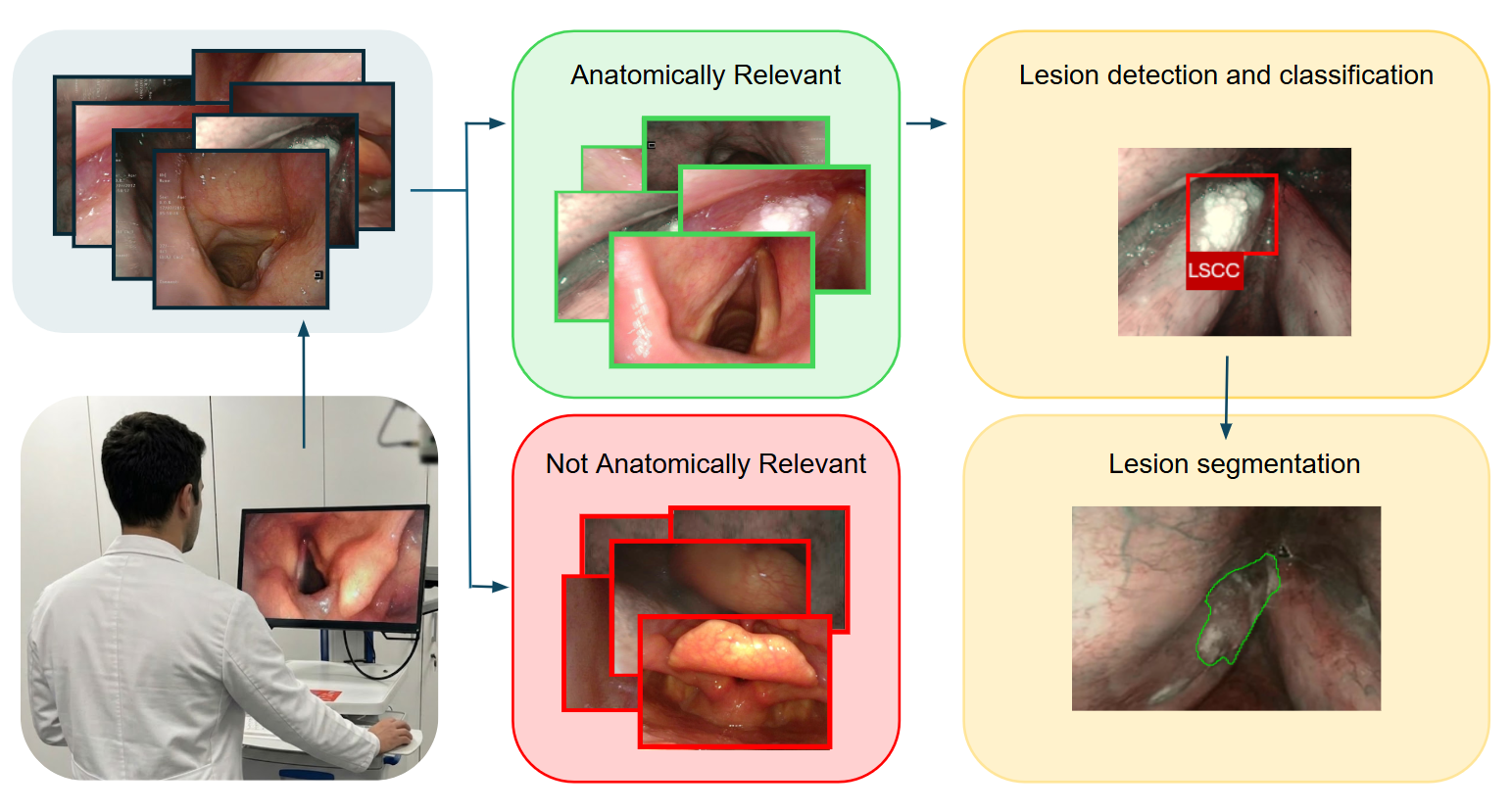
This research investigates the application of deep learning methods to the analysis of laryngoscopy images and videos for the diagnosis and surgical management of squamous cell carcinoma. The work encompasses three main tasks: automatic selection of informative frames from endoscopic videos, lesion classification for early diagnosis, and intraoperative lesion segmentation. The ultimate goal is to support surgeons through artificial intelligence tools capable of improving diagnostic workflows and increasing the precision of tumor resection during surgery.
Di Marco Naomi
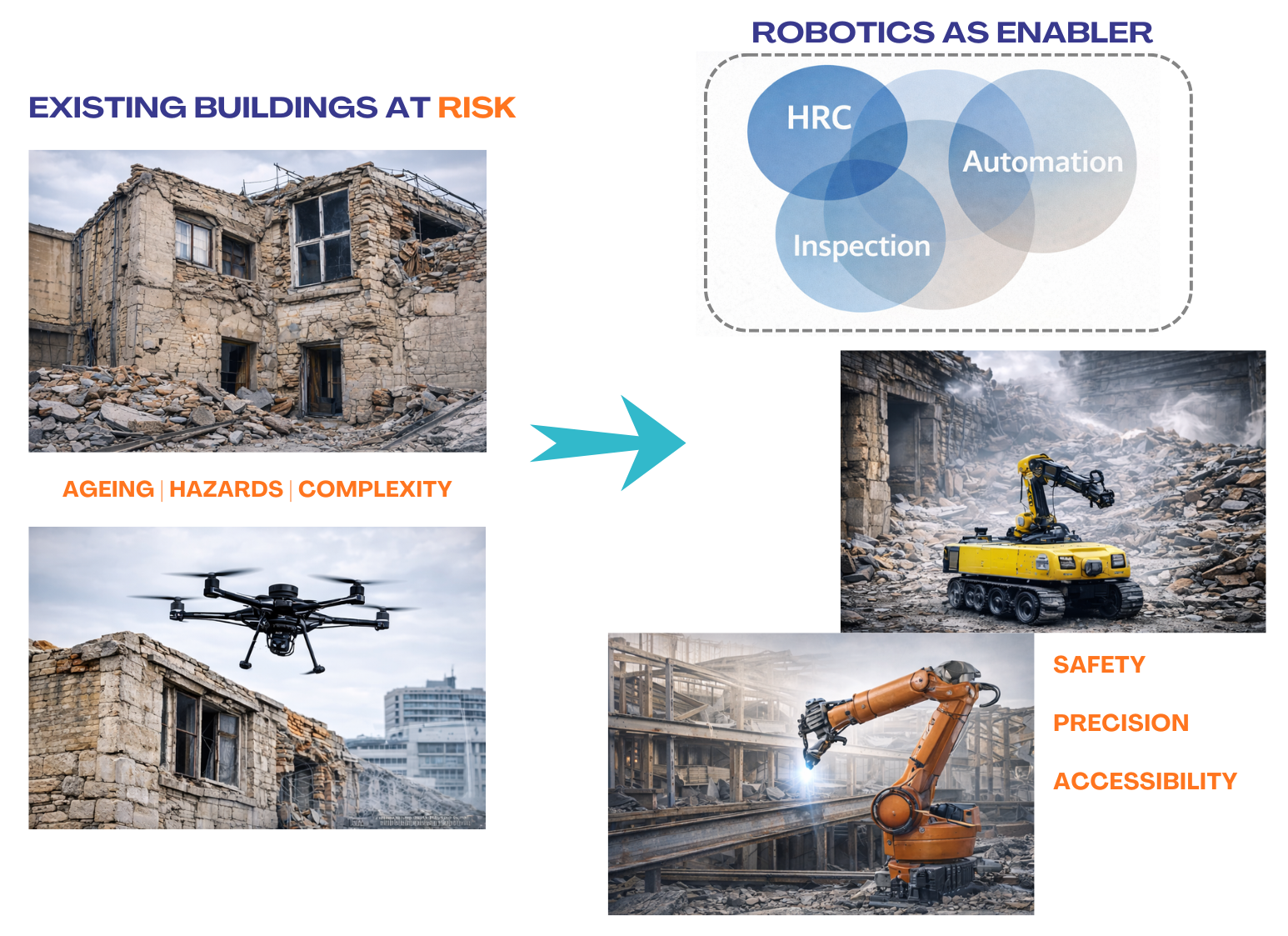
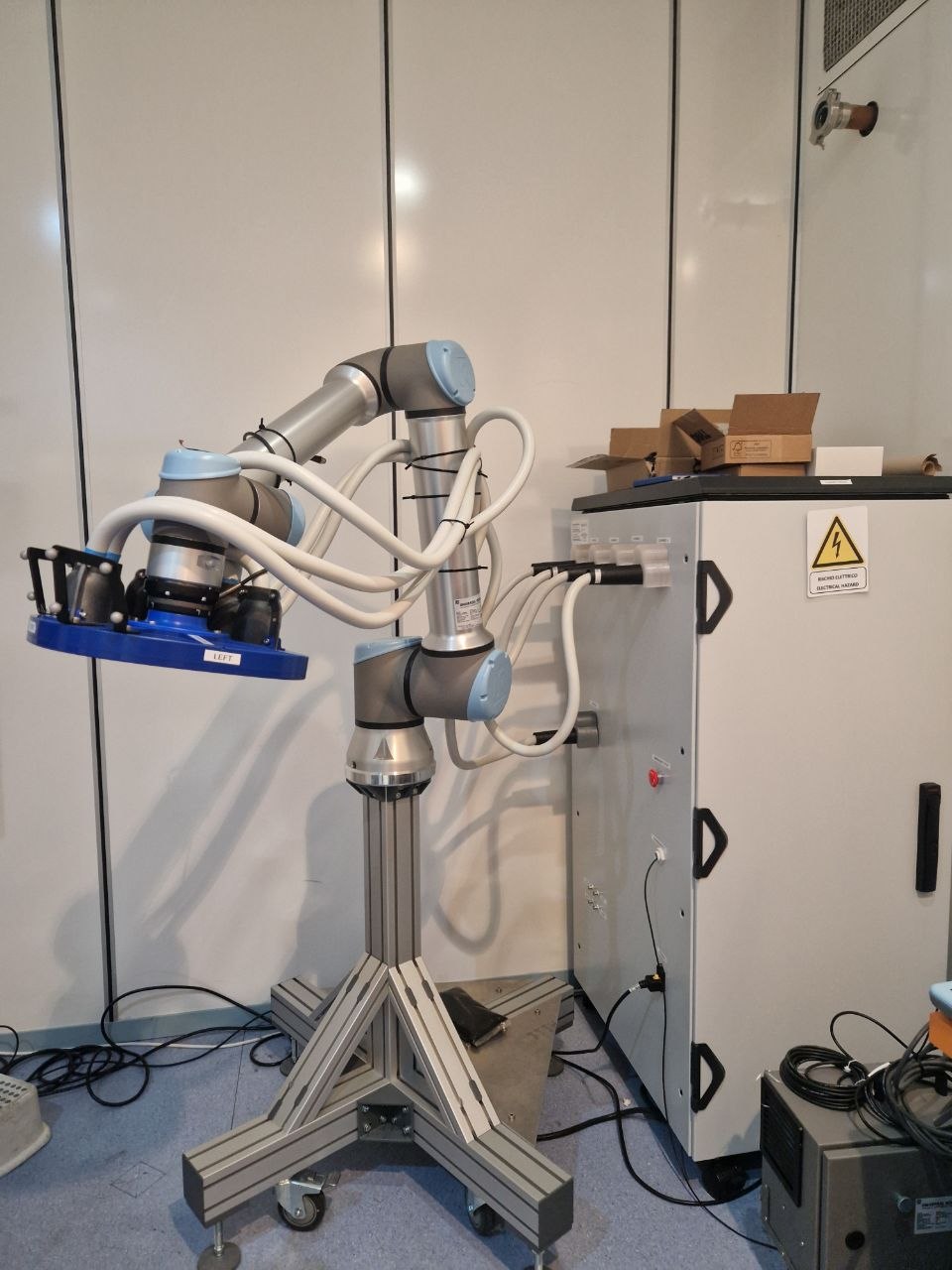
This research focuses on collaborative robotics for building refurbishment, with the aim of investigating how robotic systems can support intervention tasks on existing buildings. The project addresses the challenges posed by irregular materials, variable site conditions, and the need for safe human–robot cooperation. The main objective is to compare human and robotic performance in selected construction tasks, identify key perceptive capabilities required for refurbishment activities, and define suitable sensory and decision-making strategies. Finally, the research aims to develop a multi-criteria framework to support efficient, safe, and quality-oriented human–robot collaboration in building refurbishment processes.
Guerriero Lorenza
The first part of the project aims to characterise dynamic neural states using Hidden Markov Models. By applying this probabilistic framework to electrophysiological data, we aim to reconstruct the rapid, transient transitions between distinct brain states at rest or during specific tasks. In parallel, the second study focuses on investigating functional brain states through multi-locus Transcranial Magnetic Stimulation (mTMS). Specifically, this approach will allow for the non-invasive modulation and mapping of cortical connectivity with high spatio-temporal precision. Therefore, the ultimate goal is to decode these distinct brain states and subsequently utilise mTMS to precisely modulate them.
Guth Clara
My research focuses on monitoring river meander migration in Amazonian floodplains (Rio Tapiche, Rio Juruá, Rio Ucayali) during dry seasons, using multi-source satellite remote sensing. I developed a Google Earth Engine pipeline integrating Sentinel-1, Sentinel-2, Landsat, and SWOT data to generate MNDWI-based binary water masks, extract river channel widths, and detect lateral migration patterns over time. The workflow also correlates river dynamics with precipitation data and incorporates discharge calculations. Methodologically, I adapted RivWidth-based approaches for channel mask generation. The broader goal is to support Earth observation applications for river infrastructure monitoring and to better understand fluvial geomorphology in tropical river systems.
Luppino Francesco
This project aims to investigate the use of infrared thermography as a non-invasive tool for assessing superficial vascularization and skin perfusion. By analyzing thermal patterns on the body surface, the study seeks to identify physiological alterations that may be associated with local vascular changes, inflammation, or tissue abnormalities. A key objective is to integrate thermographic data with artificial intelligence methods, including image processing and machine learning algorithms, to support automatic pattern recognition and improve diagnostic accuracy. The final goal is to develop a reliable, low-cost, and patient-friendly approach for early screening, monitoring, and non-invasive diagnosis in routine clinical practice.
worldwide.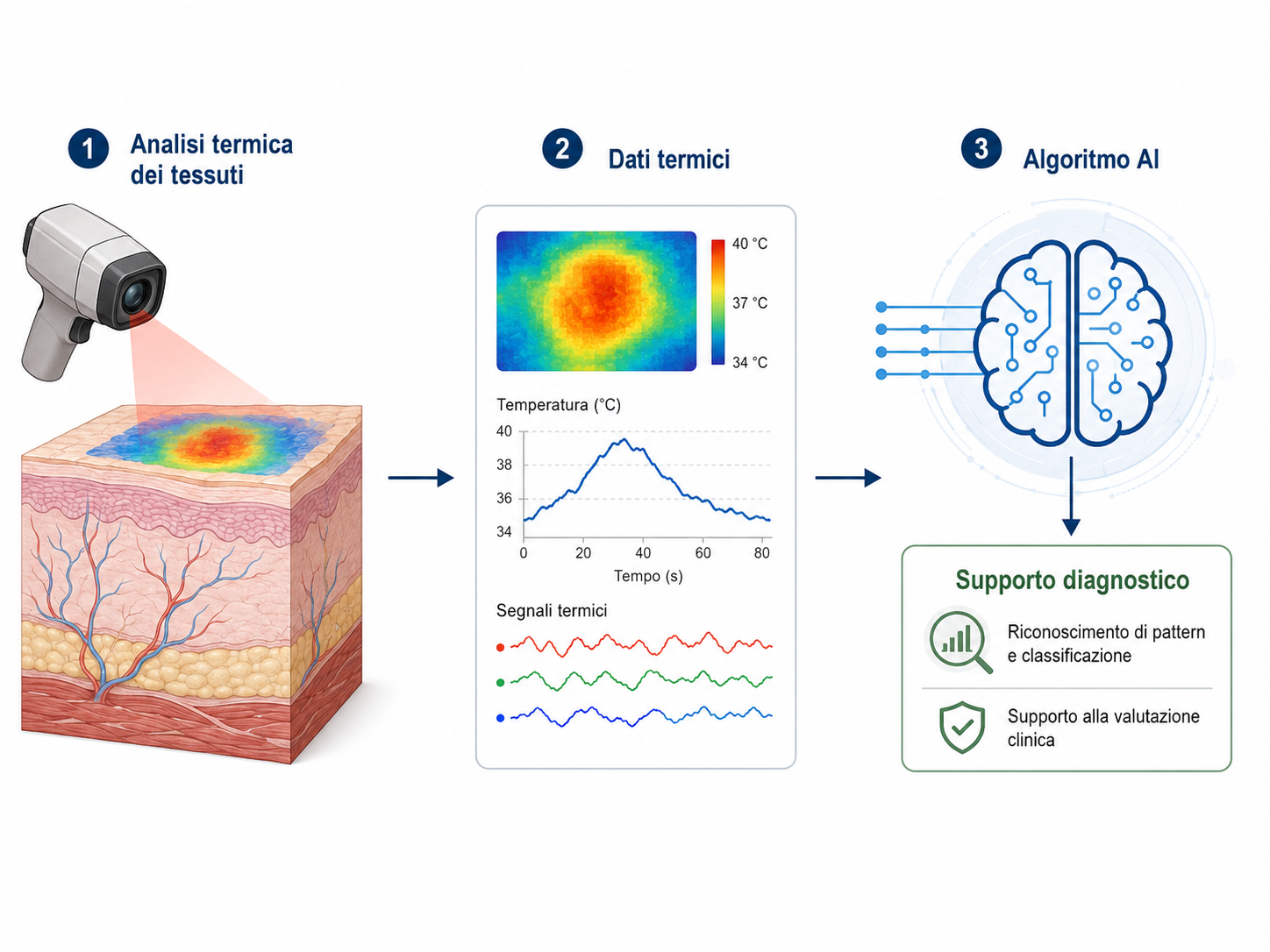
Santilli Di Luia Gregory
This PhD research advances the multi-risk assessment and safety evaluation of existing bridges and viaducts. As critical transport infrastructure ages, it becomes increasingly vulnerable to overlapping natural and anthropogenic threats. This project develops a comprehensive probabilistic framework to quantify structural reliability under combined hazard scenarios. By integrating advanced non-linear numerical modeling with probabilistic multi-hazard combinations (e.g., seismic, hydraulic, and environmental degradation), the research provides innovative, data-driven methodologies for prioritizing retrofitting interventions. Ultimately, this work aims to optimize decision-making for infrastructure managers, significantly enhancing the resilience and life-cycle safety of critical transportation networks.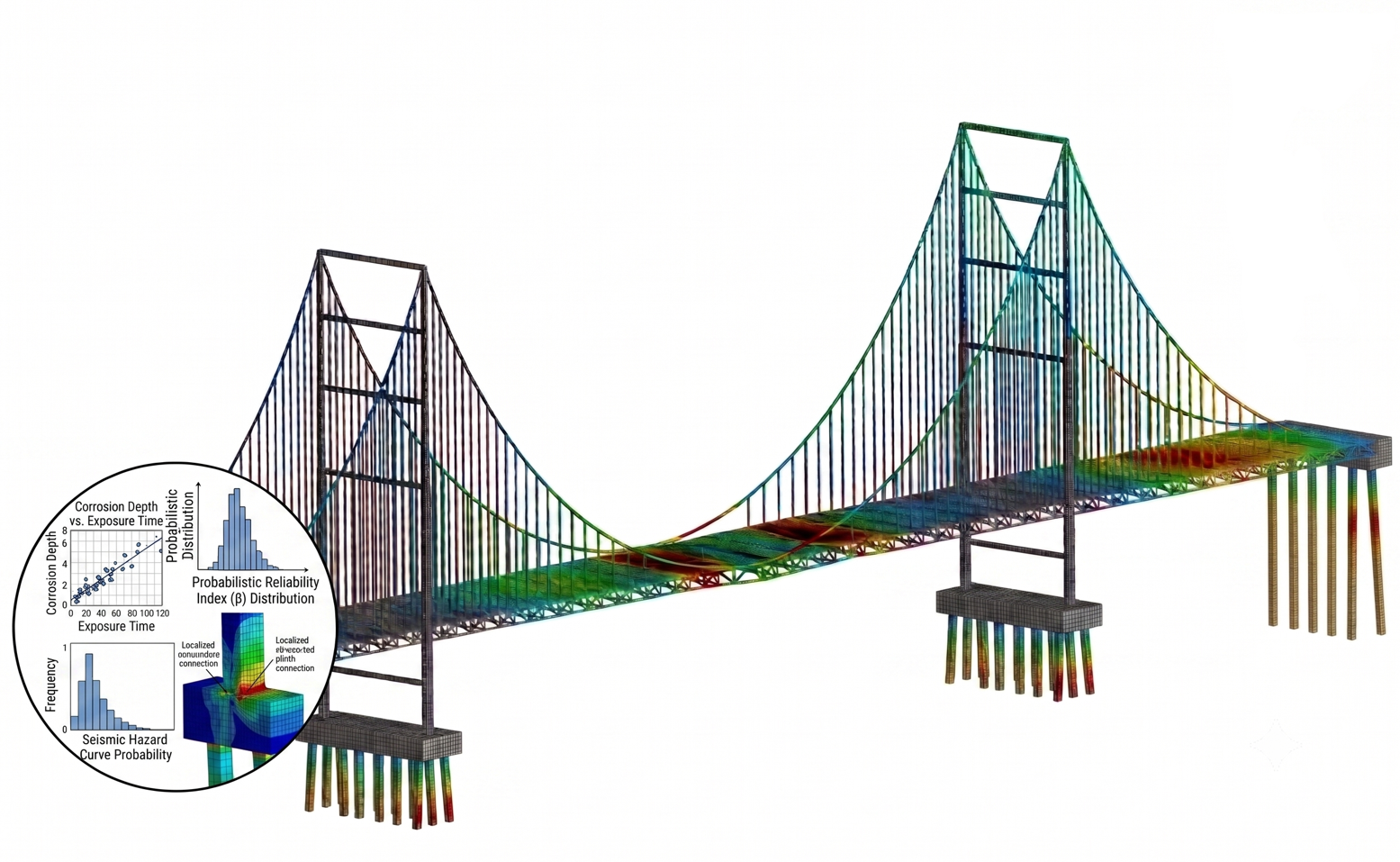
Valvano Christian
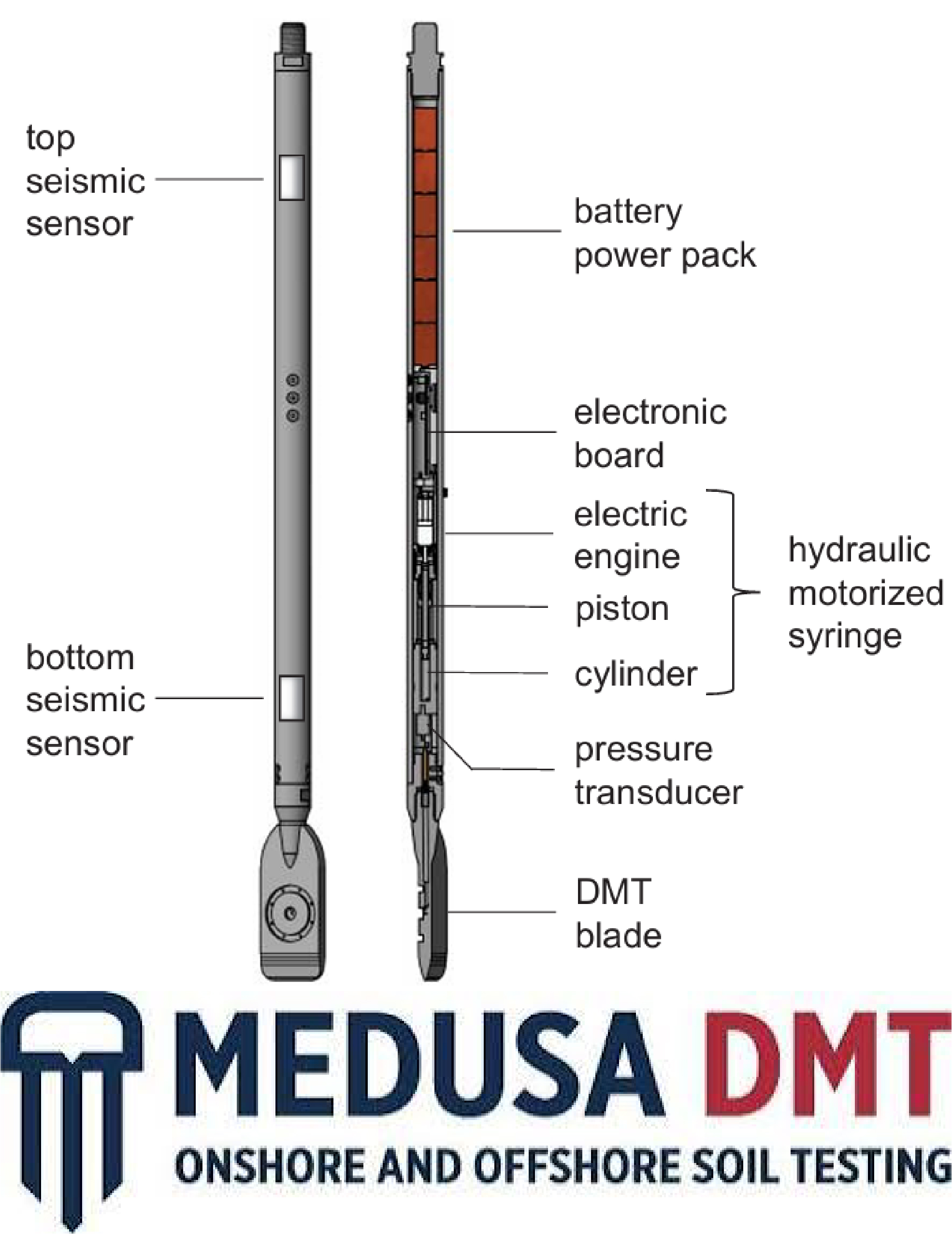
The PhD project aims to investigate the Medusa DMT/SDMT engineering applications, improving existing predictive models in poorly understood contexts. A key aspect to explore is the applicability of existing empirical correlations for the traditional DMT test to the Medusa DMT, proposing new potential correlations for intermediate soils as well. An innovation to be developed involves enhancing the predictive performance of the DMT/SDMT in evaluating the liquefaction susceptibility of silty and sandy soils, by considering the role of variables like the fines content.
Vecchi Andrea
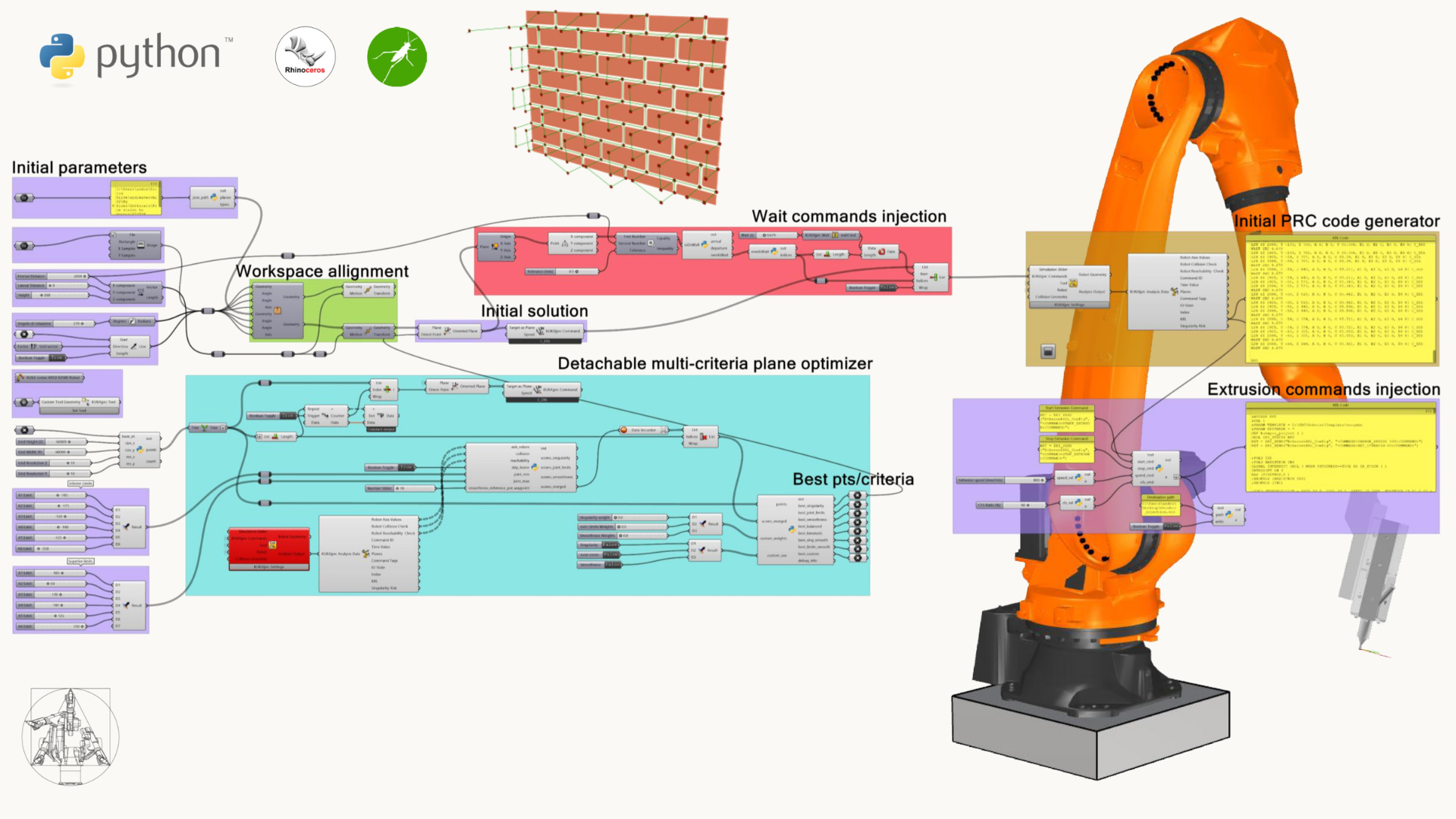
The research aims to develop an AI-robotic pipeline for automated restoration of mortar joints on masonry facades. The core idea is to use deep learning tools for image and video processing to drive improvements in construction robotics. Computer vision models analyze images to identify joints, cracks, and damaged bricks, while algorithmic methods convert this visual data into robotic toolpaths. An industrial robot equipped with a material-extrusion head then executes the reconstruction, programmed through a virtual commissioning environment where simulation and video enable validation before physical execution. The work bridges artificial intelligence, image and video analysis, and robotics to advance automated architectural heritage conservation.
Collegio dei Docenti
AMELIO Alessia
AMOROSO Sara
BERARDI Luigi
BRANDO Giuseppe
CARDONE Daniela
DE BELLIS Maria Laura
IEZZI Gianluca
MARZETTI Laura
MASCIOTTA Maria Giovanna
MERLA Arcangelo
MOCCIA Sara
PACE Bruno
PAGLIAROLI Alessandro
PEPE Massimiliano
PIERANTOZZI Mariano
SANGIORGIO Valentino
SAPONIERI Alessandra
SEPE Vincenzo
SPACONE Enrico
VASTA Marcello
Infrastrutture di ricerca
Infrastrutture di ricerca
TRAINING ACTIVITIES
Training activities / Offerta formativa Ciclo XLI
 Timetable of courses / Orario dei corsi (update 11 Jun. 2026)
Training activities / Offerta formativa Ciclo XXXIX
Timetable of courses / Orario dei corsi
 39_02_-_Bibliometry and research evaluation 39_03_-_CV_and_research_project_writing 39_04_-_handling_uncertainty_in_complex_systems 39_05_-_coding_for_data_science 39_06_-_numerical_heat_transfer_for_applications 39_07_-_computational_mechanics_for_hard_biological_tissues 39_09_-_advanced_signal_processing_for_engineering_and_bioengineering 39_15_-_Seismic protection of structures through passive and semi-active dissipative systems 39_16 - Multidisciplinary studies for local seismic hazard assessment 39_25_-_Additive manufacturing technologies in building construction 39_26_-_introduction_to_wind_engineering 39_29_-_advanced_topics_in_port_and_coastal_engineering
 Delivered/Erogata To be delivered/Da erogare Timetable of courses / Orario dei corsi
38_03_-_cv_and_research_project_writing 38_04_-_Handling_uncertainty_in_complex_systems 38_05_-_Coding_for_data_science 38_06_-_Numerical_heat_transfer_for_applications 38_07_-_Computational_mechanics_for_hard_biological_tissues 38_08_-_Big_data_analysis_for_engineering_and_bioengineering 38_09_-_Advanced_signal_processing_for_engineering_and_bioengineering 38_24_-_Bioengineering_in_human-machine_interaction 38_26_-_Introduction_to_wind_engineering_new 38_29_-_Advanced_topics_in_port_and_coastal_engineering Delivered/Erogata To be delivered/Da erogare
Seminars and other courses
- Introduction to Building Information Modelling-Crisan, Prof. Andrei Crisan
- Case studies using in situ and laboratory geotechnical data in Turkey, Prof. Ing. Müge Akin
- Rock Mechanics-Basic Concepts of Rock Slope Stability, Prof. Dr. Mutluhan Akin
- Using Complex Network Theory, Dr. Antonietta Simone
- Seismic Hazard & Risk, Dr. Francesco Visini
- Coastal Engineering: Experimental and Numerical Modelling for Climate-Resilient Coastal Safety, Dr. Corrado Altomare
- Paradigm of Structure-Property Relationship, Prof. Adam Gadomski
- Seismic engineering, Prof. Joel P. Conte and Prof. Shiling Pei
- Structural Reliability & Risk-Based design, Dr. Raffaele De Risi, Senior Lecturer in Civil Engineering
- Earth observation with optical instruments and SAR, Prof. S. Kuçaj
- Advanced design of metallic structures, Prof. A. Dogari
- Integrated Approaches for Assessing Risk in Historic Urban Areas From Data Management to Decision-Making, Prof. T. Ferreira
- Bayesian Machine Learning in Geotechnical Engineering, Prof. Jianye Ching
Delivered/Erogata To be delivered/Da erogare
Assicurazione Qualità (AQ-PhD)
Prof. Luigi Berardi (ReAQ-PhD)
Prof.ssa Laura Marzetti
Prof. Valentino Sangiorgio
Rappresentaza Dottorandi
Seminars and other courses
- Introduction to Building Information Modelling-Crisan, Prof. Andrei Crisan
- Case studies using in situ and laboratory geotechnical data in Turkey, Prof. Ing. Müge Akin
- Rock Mechanics-Basic Concepts of Rock Slope Stability, Prof. Dr. Mutluhan Akin
- Using Complex Network Theory, Dr. Antonietta Simone
- Seismic Hazard & Risk, Dr. Francesco Visini
- Coastal Engineering: Experimental and Numerical Modelling for Climate-Resilient Coastal Safety, Dr. Corrado Altomare
- Paradigm of Structure-Property Relationship, Prof. Adam Gadomski
- Seismic engineering, Prof. Joel P. Conte and Prof. Shiling Pei
- Structural Reliability & Risk-Based design, Dr. Raffaele De Risi, Senior Lecturer in Civil Engineering
- Earth observation with optical instruments and SAR, Prof. S. Kuçaj
- Advanced design of metallic structures, Prof. A. Dogari
- Integrated Approaches for Assessing Risk in Historic Urban Areas From Data Management to Decision-Making, Prof. T. Ferreira
- Bayesian Machine Learning in Geotechnical Engineering, Prof. Jianye Ching
.jpeg)
Delivered/Erogata To be delivered/Da erogare
Assicurazione Qualità (AQ-PhD)
Prof. Luigi Berardi (ReAQ-PhD)
Prof.ssa Laura Marzetti
Prof. Valentino Sangiorgio
Rappresentaza Dottorandi
Avvisi
Scopri cosa vuol dire essere dell'Ud'A
SEDE DI CHIETI
Via dei Vestini,31
Centralino 0871.3551
SEDE DI PESCARA
Viale Pindaro,42
Centralino 085.45371
email: info@unich.it
PEC: ateneo@pec.unich.it
Partita IVA 01335970693


